Car Won't Start but Dashboard Lights Work? What to Check
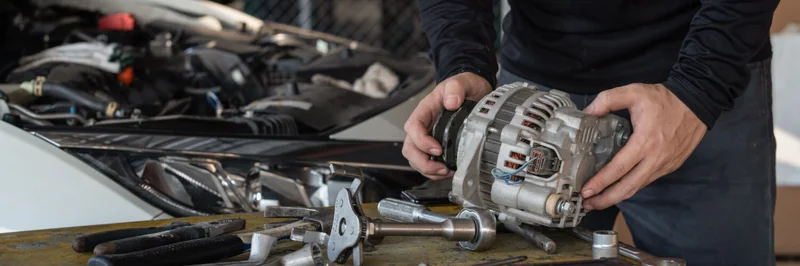
When a car won't start but the dashboard lights work, it can seem as though the battery must be fine. In reality, interior lights and dashboard electronics need much less power than the starter motor. A battery may operate those accessories but still be unable to crank the engine.[1]
The sound and behavior you notice during a start attempt can provide useful clues. They do not prove which component has failed, however. A weak battery, corroded cable, starter-circuit fault, charging problem, security-system issue, or fuel-delivery problem can create overlapping symptoms. Testing is safer and usually less expensive than replacing a part based on sound alone.
Start With Safety, Not Guesswork
If the vehicle is stopped near traffic, focus first on moving yourself and passengers to a safer location when that can be done without driving an unsafe vehicle. Set the parking brake and use the hazard lights. Do not lean over moving engine components, and do not attempt to jump-start a battery that is visibly cracked, leaking, swollen, or frozen.[1]
Stop and arrange assistance if you notice smoke, a strong fuel or burning odor, severe shaking, loss of power, a red oil-pressure warning, or an overheating warning. Those conditions can make repeated start attempts unsafe or cause additional damage.
Why the Lights Can Work When the Engine Will Not Crank
The starter needs a large burst of electrical current. Dashboard lights, the radio, and cabin lamps use a much smaller amount. That is why bright-looking accessories do not establish that the battery is healthy under load.[1]
Before trying again, turn off the climate-control fan, headlights, chargers, and other accessories. Make one brief start attempt and note what happens:
- Do the lights dim sharply?
- Do you hear rapid clicks, one solid click, grinding, or silence?
- Does the engine crank slowly, crank normally without starting, or not crank at all?
- Did the vehicle recently need a jump or show a battery-shaped warning light?
These observations can help a technician choose the right tests.
Battery Clues
A weak battery or poor cable connection is more likely when the lights dim heavily during the start attempt, the engine cranks slowly, or the starter relay clicks rapidly. Corrosion or looseness at a battery terminal can also restrict current and imitate a failed battery.[1]
A jump-start may provide more information, but it is not a complete diagnosis. If the vehicle starts after a proper jump, the battery may be discharged, aging, or unable to hold a charge. The charging system may also have failed to replenish it. If it does not start, the battery could still be involved, but the starter circuit, cables, or another system may need testing.
When testing confirms the battery is the cause, Fixed in Minutes offers on-site battery replacement.
Starter and Starter-Circuit Clues
A single click with little or no engine movement can point toward the starter motor or solenoid, especially when the lights remain relatively steady. Grinding or a high-speed whir can also suggest that the starter is not engaging correctly.
Those sounds are not conclusive. A weak battery, poor ground, damaged cable, relay, fuse, ignition switch, neutral-safety switch, or anti-theft system can prevent the starter from operating. A proper starting-system check measures battery condition and voltage drop before the starter is replaced. The FTC specifically notes that a dead battery or poor connection can appear to be a defective starter.[2]
See our starter and alternator service page for the types of on-site electrical repairs available.
Alternator and Charging-System Clues
The alternator normally supports the electrical system while the engine runs and recharges the battery. It does not directly crank the engine. Charging trouble becomes more likely when a vehicle repeatedly needs a jump, the battery dies soon after replacement, lights flicker while driving, or the vehicle starts after a jump and later stalls.[1]
The battery warning lamp can provide context, but it does not identify a specific part by itself. The charging system should be tested under the conditions specified for the vehicle. Replacing the alternator without checking the battery, belt, wiring, and connections can leave the real fault unresolved.
When the Engine Cranks but Still Will Not Start
If the engine turns at normal speed but never starts, the problem may not be the battery or starter. Fuel delivery, ignition, sensor signals, engine timing, and security authorization are among the possibilities.[1] A diagnostic scan can reveal stored trouble codes, but a code is a starting point rather than a replacement instruction. The technician may need to compare live data, verify power and ground, or perform mechanical checks.
Fixed in Minutes provides on-site check-engine diagnostics for starting and drivability problems that require more than a battery test.
Safe Checks Before Scheduling Service
With the vehicle off and the parking brake set, you can look for an obviously loose battery cable, heavy corrosion, a damaged cable, or a belt that is visibly missing. Do not touch leaking fluid, reach near a hot engine, or bypass safety devices. Check the owner's manual before attempting a jump because connection points and procedures differ by vehicle.
Avoid repeated long cranking. A few brief attempts are enough to record the symptom. Continued cranking drains the battery, can overheat the starter, and may complicate diagnosis.
Questions to Ask Before Work Begins
Repair estimates and authorization rules vary by provider and jurisdiction. Ask whether diagnostic time is a separate charge, what is included in the estimate, what parts are proposed, and how additional work will be authorized. The FTC recommends a written estimate for repair work and advises comparing the condition, needed parts, and anticipated labor charge.[2]
Frequently Asked Questions
Can the battery be bad if the lights are bright?
Yes. Accessories draw less current than the starter. A battery must be tested under load before it is ruled out.[1]
Does one click always mean a bad starter?
No. One click can point toward the starter circuit, but battery condition, cables, grounds, relays, and control systems should be checked first.[2]
Should I keep trying if the engine does not start?
No. After a few brief attempts, stop and arrange diagnosis—especially if you notice overheating, smoke, unusual odors, grinding, or severe electrical symptoms.
If your vehicle is stuck at home, work, or a parking area in metro Atlanta, review our mobile mechanic service areas. You can book an on-site diagnostic visit or call [(470) 261-5503](tel:+14702615503).