What to Do When Your Car Overheats in Traffic or at Idle
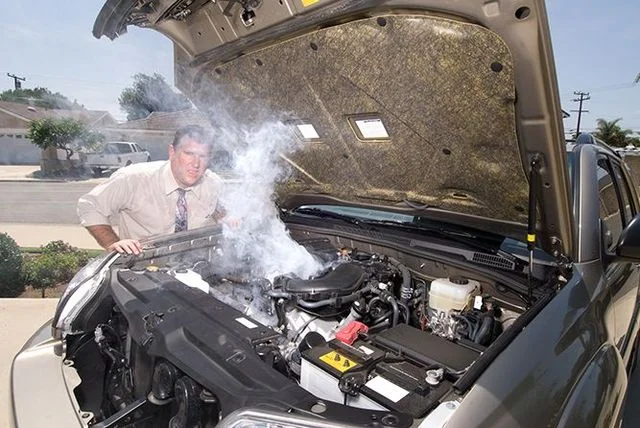
A car overheating in traffic or while idling needs prompt attention. A rising temperature gauge, temperature warning, steam, a sweet odor, or reduced engine power can indicate that the cooling system is no longer controlling heat. Continuing to drive may turn a repairable cooling-system problem into serious engine damage.[1]
Hot weather and stop-and-go driving add stress, but outside temperature alone is not a diagnosis. Low coolant, a leak, fan failure, thermostat trouble, a damaged radiator, belt trouble, a water-pump problem, low oil, or another fault can produce similar symptoms.[1] The safe response is to stop the heat cycle and inspect the system rather than trying to guess from the driver's seat.
What to Do Immediately
When the gauge moves toward hot or a temperature warning appears, reduce engine load and look for a safe place to stop. Turn off the air conditioner. If you need a short moment to reach a safe stopping area, turning the cabin heat on may help transfer some heat away from the cooling system—but it is not a repair and should not be used to justify continued driving.[1]
Once safely parked:
- Turn on the hazard lights and shut off the engine.
- Move passengers away from active traffic when it is safe to do so.
- Allow the vehicle to cool fully.
- Do not open a hot radiator cap or coolant reservoir. Pressurized coolant can cause severe burns.
- Arrange an inspection before driving again if the cause is unknown, coolant is leaking, the gauge reached the red area, or steam was present.[1]
If you are on a limited-access highway or an unsafe shoulder, stay mindful of traffic and follow instructions from roadway or emergency personnel.
Why Overheating at Idle Is a Useful Clue
At road speed, air naturally moves through the radiator. In slow traffic, the vehicle depends more heavily on its cooling fan. That is why a car that runs normally on an open road but gets hot in traffic may have an airflow problem, such as a failed fan motor, relay, fuse, sensor, wiring fault, or blocked radiator surface.
That pattern can also occur with low coolant, a weak water pump, a thermostat that is not opening correctly, or a partially restricted radiator. A symptom pattern guides the inspection; it does not confirm the failed component.
Common Cooling-System Causes
Low coolant or a leak
The cooling system is designed to remain closed. Low coolant often means fluid has escaped through a hose, radiator, reservoir, water pump, cap, gasket, or another connection.[1] Adding coolant without finding the leak may provide only temporary relief, and opening the system while hot is dangerous.
Cooling-fan trouble
Electric fans should operate under specific temperature and air-conditioning conditions. A technician may check commands, relays, fuses, power, grounds, fan speed, and sensor data before deciding that the motor itself has failed.
Thermostat or circulation problem
The thermostat regulates coolant flow as the engine warms. A restricted passage, stuck thermostat, failing water pump, damaged belt, or air trapped in the system can reduce circulation.[1]
Radiator or hose damage
A cracked radiator, restricted core, weak cap, collapsed hose, or leaking connection can keep the system from maintaining proper pressure and flow.[1]
Low engine oil or internal engine trouble
Engine oil helps limit friction and heat. Low oil can contribute to overheating.[1] Combustion gases entering the cooling system or coolant entering the engine may point to an internal problem that requires additional testing.
Why Continuing to Drive Is Risky
Excessive heat can damage gaskets, warp metal components, reduce lubrication, and eventually cause the engine to seize. AAA advises pulling over safely and turning off an overheating engine because continued driving can lead to severe damage.[1]
A car that cools down has not necessarily repaired itself. If the fan has failed or coolant is escaping, the temperature can rise again quickly. Avoid the temptation to drive “just a few more miles” based only on the gauge returning to normal.
What a Technician May Check
An overheating diagnostic usually starts with the vehicle cold. Depending on the symptoms and vehicle, the technician may inspect fluid levels and condition, visible leaks, hoses, belts, the radiator, reservoir, cap, and cooling fan. Testing may include cooling-system pressure, fan commands, sensor readings, thermostat behavior, coolant circulation, and signs of combustion leakage.
The repair should follow the evidence. Replacing a thermostat will not correct a failed fan, and replacing a fan will not stop a leaking water pump. Our coolant and overheating service explains the types of on-site checks and repairs available. If warning lights or drivability issues are also present, check-engine diagnostics may be part of the evaluation.
Hot-Weather Traffic in metro Atlanta
Heavy traffic reduces natural radiator airflow, and high ambient temperatures give the cooling system less margin. Drivers in metro Atlanta should pay attention to changes in fan sound, coolant level, temperature-gauge behavior, or air-conditioning performance. These observations are reasons to schedule inspection—not proof of a specific failed part.
Follow the maintenance schedule and coolant specifications in the owner's manual. Using the wrong coolant or mixing incompatible types can create additional problems.
Frequently Asked Questions
Can I open the radiator cap after the engine is off?
Not while the system is hot. Pressurized coolant can spray out and cause serious burns. Allow the vehicle to cool fully and follow the owner's manual.[1]
Why does the car overheat only with the air conditioner on?
The air conditioner adds heat and load, and it also changes fan commands. The symptom may expose a weak fan, airflow problem, low coolant, or another cooling-system fault, but testing is needed.
Can I drive after the temperature returns to normal?
Cooling down does not identify or correct the cause. If the gauge reached the hot zone, steam appeared, or coolant is leaking, arrange an inspection before driving again.
If the vehicle is safely parked and you need an on-site cooling-system inspection, see our full mobile auto repair services. You can book service online or call [(470) 261-5503](tel:+14702615503).